Follow us:
Home / Packages / Mt. Kenya Climb - Sirimon/Chogoria

Mt. Kenya Climb - Sirimon/Chogoria

Included

  • Park entrance Fees, Accommodation, Meals, Certified guide, Porters & Cook.

Overview

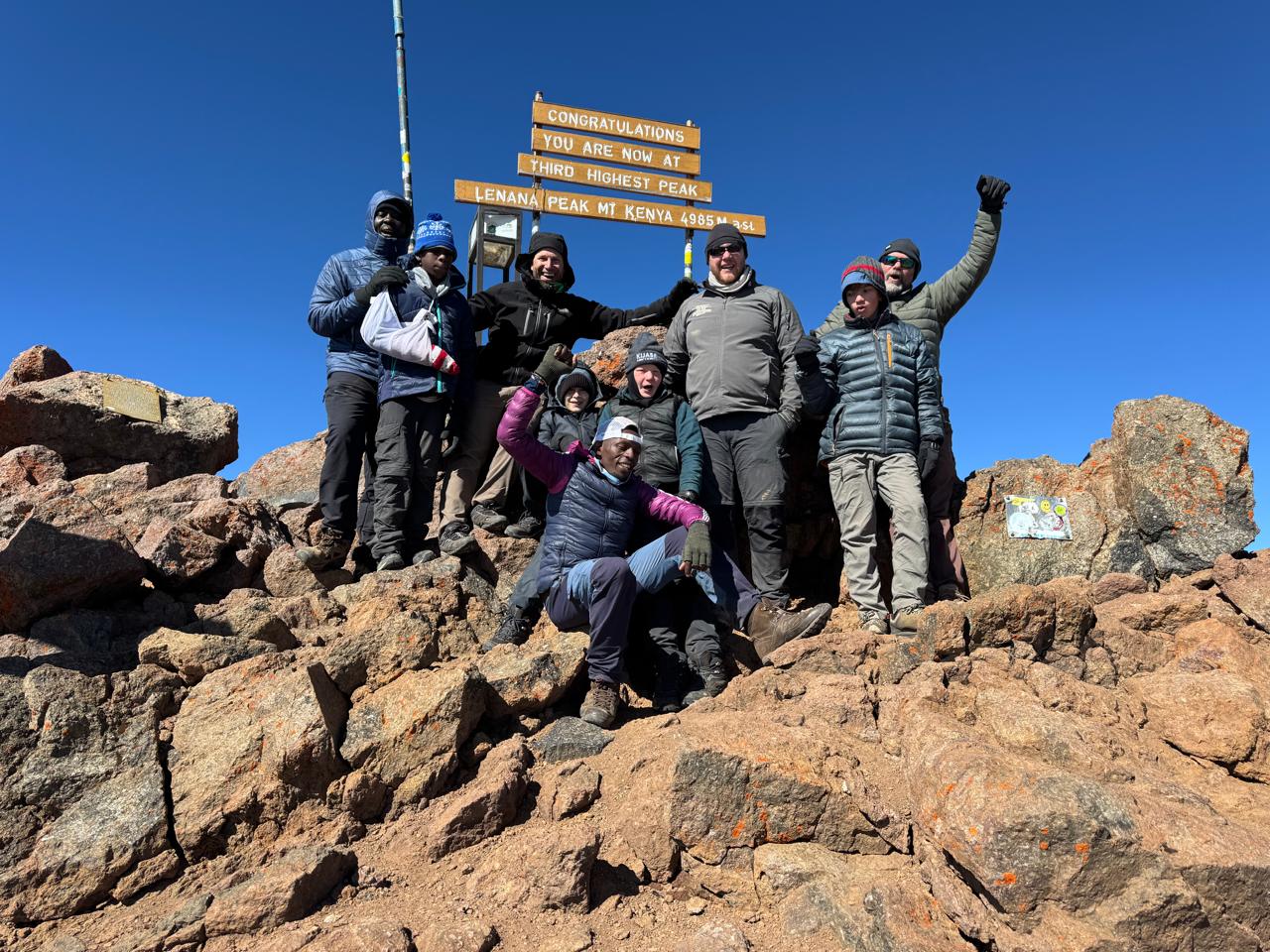
Ascend Point Lenana (4,985m) via the scenic Sirimon route and descend through the beautiful Chogoria trail. A classic Mt. Kenya trek with excellent acclimatisation and stunning alpine scenery.

Day-by-Day Itinerary

Day 1

Sirimon Gate to Old Moses Camp (Judmeier Camp): 9.2km (5.6 miles), Time 3 - 4 hours, Elevation 2650m (8,694 Feets) - 3300m (10826 Feets

Day 2

To Shipton's Camp: 15km (9 miles), Time 6-7 hours, Elevation 3300m (10,826 feets) - 4200m (13,780 Feets

Day 3

Acclimatization at Icy Mike (Elephant Skeleton) / Nanyuki Tarn: 7km (4.4 miles), elevation 4270m (14,665 feet) back Shipton camp

Day 4

Summit Push between 2 a.m to 3 a.m to Point Lenana: 4km (2.5 miles), Time 4 hours, Elevation 4985m (16,355 feet). Descend to Mintos/ Lake Ellis .

Day 5

Exit from the park through Chogoria gate

Gear & Packing List

Best Season to Climb

The best months to climb Mount Kenya are January to early March and June to October, when the weather is driest and summit views are clearest. The long rains (April-May) and short rains (November) make trails muddy and visibility poor. The Sirimon-Chogoria traverse is possible year-round with proper gear, but we strongly recommend the dry windows for the best summit success and photography.
Frequently Asked Questions

How fit do I need to be to climb Mount Kenya?
A good level of general fitness is required. If you can hike 6-8 hours over consecutive days, you'll manage. We build in acclimatisation to help your body adjust to altitude.
Do I need technical climbing experience for Point Lenana?
No. Point Lenana is a trekking peak reached on foot, no ropes or technical skills needed. Batian and Nelion are the technical peaks and require separate arrangements.
What is the summit success rate?
Our Sirimon-Chogoria route has a high success rate because the extra days aid acclimatisation. Success depends on fitness, hydration and gradual ascent.
Is altitude sickness a risk?
Mild symptoms can occur above 3,500m. Our itinerary is paced for acclimatisation, guides carry a first-aid kit and monitor you, and we descend if needed.
What happens if the weather is bad on summit day?
Your guide assesses conditions for safety. We aim for the driest months, and there is usually flexibility to attempt the summit when conditions allow.
Explore More

Related Expeditions

Mt. Kenya

East African Mountains, Sky-Running Experience

On Request
Details
Mt. Ruwenzori

Mt. Ruwenzori Margherita Expedition

On Request
Details
Mt. Meru

Mt. Meru 4-Day Trek

On Request
Details